

Close Menu
Knowvenger | Your Daily Dose of TechKnowvenger | Your Daily Dose of Tech
  • Home
  • Cloud & DevOps
    • Networking & Security
    • AWS
  • Blockchain & Web3
    • Web3 Fundamentals
  • Web Development
    • HTTP & APIs
    • Frontend Development
  • System Design
    • Software Architecture
What's Hot

Impact of Angular’s Dependency Injection Updates

May 3, 2026

Top 10 Tips for Optimizing Your React Application for Performance

April 17, 2026

Mastering HTTP 2.0: Enhancing Performance and Security for Modern Web Applications

April 17, 2026
Facebook X (Twitter) Instagram
Knowvenger | Your Daily Dose of TechKnowvenger | Your Daily Dose of Tech
  • Home
  • Cloud & DevOps
    1. Networking & Security
    2. AWS
    3. View All

    Massive RSC Vulnerability Found in React 19 and Next.js | How to Protect Your App in 2025

    December 12, 2025

    Difference Between VPN and Proxy Server | Which One Should You Choose?

    November 2, 2025

    How to Create Your Own VPN on a Private Server

    October 26, 2025

    10 Best Practices for Optimizing Your AWS Resource Management to Reduce Costs

    April 17, 2026

    How to Reset MFA in AWS Cognito Hosted UI

    October 6, 2025

    10 Best Practices for Optimizing Your AWS Resource Management to Reduce Costs

    April 17, 2026

    Building Scalable Applications in the Cloud: Best Practices for AWS Deployment

    April 17, 2026

    AI in Cloud Infrastructure: Smarter Automation & Optimization

    March 11, 2026

    Shared vs VPS vs Cloud Hosting | Which Is Best ?

    January 15, 2026
  • Blockchain & Web3
    1. Web3 Fundamentals
    2. View All

    Web3 | How Decentralization Is Changing the Internet in 2025

    October 13, 2025

    Web3 | How Decentralization Is Changing the Internet in 2025

    October 13, 2025
  • Web Development
    1. HTTP & APIs
    2. Frontend Development
    3. View All

    Mastering HTTP 2.0: Enhancing Performance and Security for Modern Web Applications

    April 17, 2026

    10 Best Practices for Securing APIs in Cloud and DevOps Environments

    April 17, 2026

    10 Essential Best Practices for Securing Your APIs in 2026

    April 13, 2026

    10 Essential Best Practices for Building Secure APIs in a Cloud Environment

    March 14, 2026

    Impact of Angular’s Dependency Injection Updates

    May 3, 2026

    Top 10 Tips for Optimizing Your React Application for Performance

    April 17, 2026

    10 Essential Tips for Optimizing Angular Apps for Better Performance

    March 11, 2026

    What’s New in React 19

    November 26, 2025

    Impact of Angular’s Dependency Injection Updates

    May 3, 2026

    Top 10 Tips for Optimizing Your React Application for Performance

    April 17, 2026

    Mastering HTTP 2.0: Enhancing Performance and Security for Modern Web Applications

    April 17, 2026

    10 Best Practices for Securing APIs in Cloud and DevOps Environments

    April 17, 2026
  • System Design
    1. Software Architecture
    2. View All

    Microservices Architecture

    March 1, 2026

    Monolith Architecture

    January 2, 2026

    Microservices Architecture

    March 1, 2026

    Monolith Architecture

    January 2, 2026
Knowvenger | Your Daily Dose of TechKnowvenger | Your Daily Dose of Tech
Home » Impact of Angular’s Dependency Injection Updates
Angular

Impact of Angular’s Dependency Injection Updates

yasiru_jayashanBy yasiru_jayashanMay 3, 2026No Comments4 Mins Read
Share Facebook Twitter Pinterest LinkedIn Tumblr Reddit Telegram Email
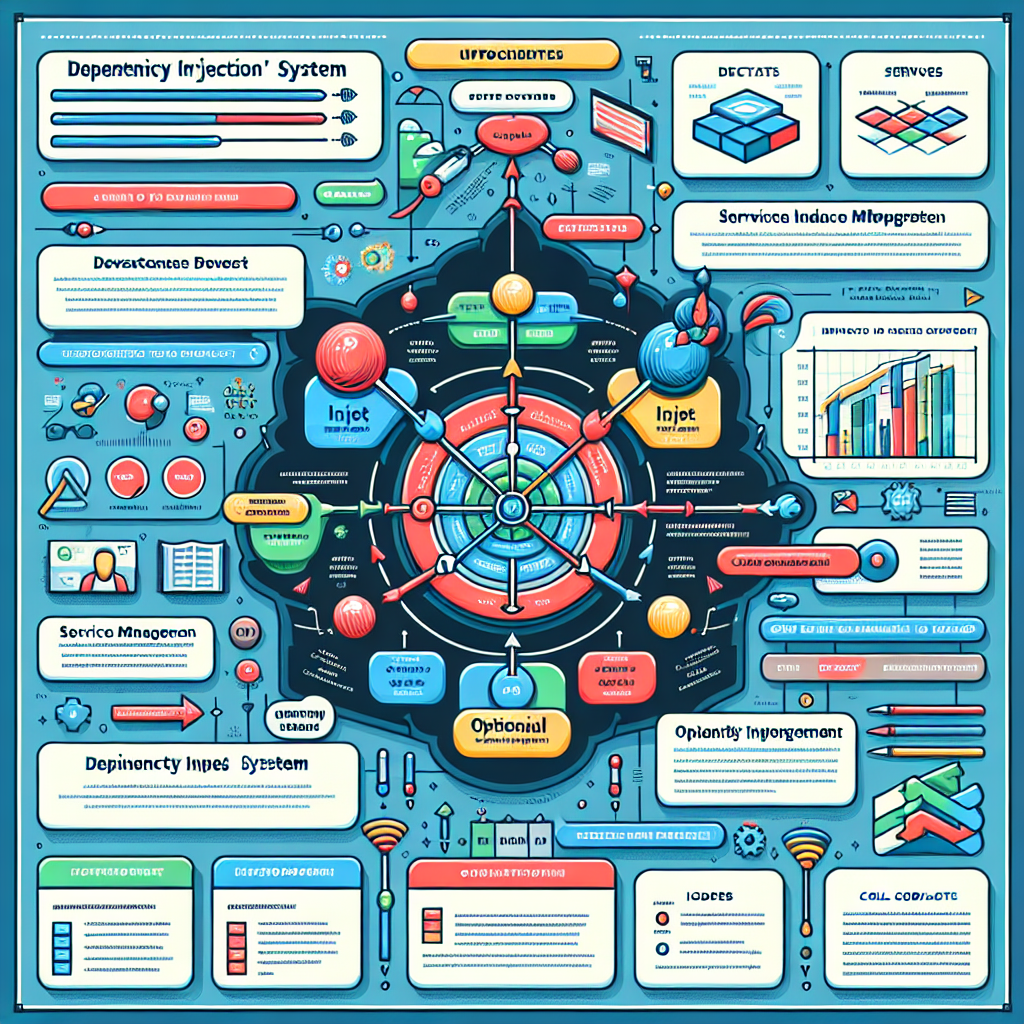
A detailed infographic showcasing Angular's dependency injection system updates, highlighting the 'Inject' and 'Optional' dec
Share
Facebook Twitter LinkedIn Pinterest Email

Angular has undergone notable changes in its dependency injection (DI) system with the introduction of Angular 14 and 15. These updates are shifting how developers manage services and instantiate components, prompting a need for deeper understanding among users. The new ‘Inject’ and ‘Optional’ decorators streamline DI for a variety of use cases, while improvements to the hierarchical DI mechanism elevate both performance and modular development. This article explores these changes and their implications for modern Angular applications.

The Core of Angular’s Dependency Injection System

At the heart of Angular’s DI system lies the concept of providers and injectors, which play a crucial role in instantiating services. A solid grasp of how services are provided is essential for leveraging DI effectively. Developers can utilize different types of providers: ‘root’, ‘platform’, and ‘optional’ providers, each serving specific use cases.

Understanding Providers

  • Root Providers: Services marked with ‘providedIn: root’ are shared across the application and instantiated only once.
  • Platform Providers: These are used for services that need to be available across multiple Angular applications.
  • Optional Providers: The ‘Optional’ decorator allows developers to indicate that a service is not mandatory, avoiding errors when the service is not present in the provided module.

Hierarchical DI Mechanism Enhancements

Recent updates have significantly refined Angular’s hierarchical DI mechanism, impacting how scoped services are managed. The improvements help in handling component instances effectively, providing more control over service resolution and management.

Implications for Scoped Services

Scoped services are bound to the component tree, which means they can exist only within the scope of a particular component and its children. Angular’s default behavior creates a new instance of a service when a component is instantiated unless explicitly shared. This distinction is critical in preventing misconceptions about service persistence and state management in complex component hierarchies.

Performance Considerations in Service Instantiation

Performance implications of instantiating services at various levels in the component tree must be assessed. Using singleton services simplifies state management but may lead to memory issues and unintended side effects due to mutable state. On the contrary, request-scoped services can help maintain clean state management while optimizing performance.

Tradeoffs: Singleton vs. Request-Scoped Instances

  • Singleton Services: While advantageous for simplifying state across the application, they may lead to memory bloat and undesirable side effects when services hold mutable data.
  • Request-Scoped Services: Encourage better state management and minimize performance issues, especially in large applications, but they may require more consideration regarding service lifetime and instance sharing.

Practical Examples and Use Cases

It is imperative to explore current release notes and migration guides from Angular’s official documentation. Testing the new features includes utilizing the ‘Inject’ and ‘Optional’ decorators to define services and gauge their functionality in various configurations. Below are a few practical scenarios:

Creating Services with ‘Inject’

Utilizing the ‘Inject’ decorator provides a clearer and more concise way to define dependencies in constructors. For example:

constructor(@Inject(MyService) myService: MyService) { }

This makes the dependency explicit and enforceable by TypeScript.

Using ‘Optional’ for Non-Mandatory Services

By employing the ‘Optional’ decorator, developers can safely request a service without risking a runtime error if it isn’t provided:

constructor(@Optional() private myOptionalService: MyOptionalService) { }

This flexibility allows for clean error handling.

Debugging Angular’s DI System

To deepen understanding, leveraging Angular DevTools can demystify the injector hierarchy and facilitate service resolution debugging. Visualizing these relationships can highlight configuration issues and enable developers to optimize their DI setup effectively.

Conclusion: Actionable Takeaways

The recent updates in Angular’s DI system offer powerful tools to refine service management and instantiation processes. Developers are encouraged to:

  • Experiment with the ‘Inject’ and ‘Optional’ decorators for more flexible DI configurations.
  • Assess the performance implications of different scoping strategies when planning application architecture.
  • Utilize Angular DevTools to generalize debugging strategies for optimizing DI.
  • Stay informed by reviewing the latest release notes for continuous updates and enhancements.

By embracing these advancements, developers can create more efficient, maintainable, and performant Angular applications.

Angular 14 Angular 15 component instantiation dependency injection Inject decorator Optional decorator performance implications service management
Share. Facebook Twitter Pinterest LinkedIn Tumblr Email
Previous ArticleTop 10 Tips for Optimizing Your React Application for Performance
yasiru_jayashan
  • Website

Related Posts

Angular

10 Essential Tips for Optimizing Angular Apps for Better Performance

March 11, 2026
Angular

What is Zoneless Angular ?

November 23, 2025
Angular

What’s New in Angular 21 | 2025 Update

November 22, 2025
Add A Comment
Leave A Reply Cancel Reply

Top Posts

Angular subscribe() Function Explained

October 18, 202596 Views

How to Reset MFA in AWS Cognito Hosted UI

October 6, 202586 Views

Web3 | How Decentralization Is Changing the Internet in 2025

October 13, 202558 Views
Stay In Touch
  • Facebook
  • YouTube
  • TikTok
  • WhatsApp
  • Twitter
  • Instagram
Latest Reviews
Most Popular

Angular subscribe() Function Explained

October 18, 202596 Views

How to Reset MFA in AWS Cognito Hosted UI

October 6, 202586 Views

Web3 | How Decentralization Is Changing the Internet in 2025

October 13, 202558 Views
Our Picks

Impact of Angular’s Dependency Injection Updates

May 3, 2026

Top 10 Tips for Optimizing Your React Application for Performance

April 17, 2026

Mastering HTTP 2.0: Enhancing Performance and Security for Modern Web Applications

April 17, 2026
© 2026 Knowvenger. All rights reserved.
  • Home
  • Cloud & DevOps
    1. Networking & Security
    2. AWS
    3. View All

    Massive RSC Vulnerability Found in React 19 and Next.js | How to Protect Your App in 2025

    December 12, 2025

    Difference Between VPN and Proxy Server | Which One Should You Choose?

    November 2, 2025

    How to Create Your Own VPN on a Private Server

    October 26, 2025

    10 Best Practices for Optimizing Your AWS Resource Management to Reduce Costs

    April 17, 2026

    How to Reset MFA in AWS Cognito Hosted UI

    October 6, 2025

    10 Best Practices for Optimizing Your AWS Resource Management to Reduce Costs

    April 17, 2026

    Building Scalable Applications in the Cloud: Best Practices for AWS Deployment

    April 17, 2026

    AI in Cloud Infrastructure: Smarter Automation & Optimization

    March 11, 2026

    Shared vs VPS vs Cloud Hosting | Which Is Best ?

    January 15, 2026
  • Blockchain & Web3
    1. Web3 Fundamentals
    2. View All

    Web3 | How Decentralization Is Changing the Internet in 2025

    October 13, 2025

    Web3 | How Decentralization Is Changing the Internet in 2025

    October 13, 2025
  • Web Development
    1. HTTP & APIs
    2. Frontend Development
    3. View All

    Mastering HTTP 2.0: Enhancing Performance and Security for Modern Web Applications

    April 17, 2026

    10 Best Practices for Securing APIs in Cloud and DevOps Environments

    April 17, 2026

    10 Essential Best Practices for Securing Your APIs in 2026

    April 13, 2026

    10 Essential Best Practices for Building Secure APIs in a Cloud Environment

    March 14, 2026

    Impact of Angular’s Dependency Injection Updates

    May 3, 2026

    Top 10 Tips for Optimizing Your React Application for Performance

    April 17, 2026

    10 Essential Tips for Optimizing Angular Apps for Better Performance

    March 11, 2026

    What’s New in React 19

    November 26, 2025

    Impact of Angular’s Dependency Injection Updates

    May 3, 2026

    Top 10 Tips for Optimizing Your React Application for Performance

    April 17, 2026

    Mastering HTTP 2.0: Enhancing Performance and Security for Modern Web Applications

    April 17, 2026

    10 Best Practices for Securing APIs in Cloud and DevOps Environments

    April 17, 2026
  • System Design
    1. Software Architecture
    2. View All

    Microservices Architecture

    March 1, 2026

    Monolith Architecture

    January 2, 2026

    Microservices Architecture

    March 1, 2026

    Monolith Architecture

    January 2, 2026

Type above and press Enter to search. Press Esc to cancel.